The identification of unidentified human remains (UHRs) is a humanitarian imperative and a critical step in many criminal investigations. Forensic Genetic Genealogy (FGG) combines dense single nucleotide polymorphism testing with genealogical research to attempt to overcome the limitations of traditional forensic methods, particularly in cases involving degraded DNA or lacking reference samples.
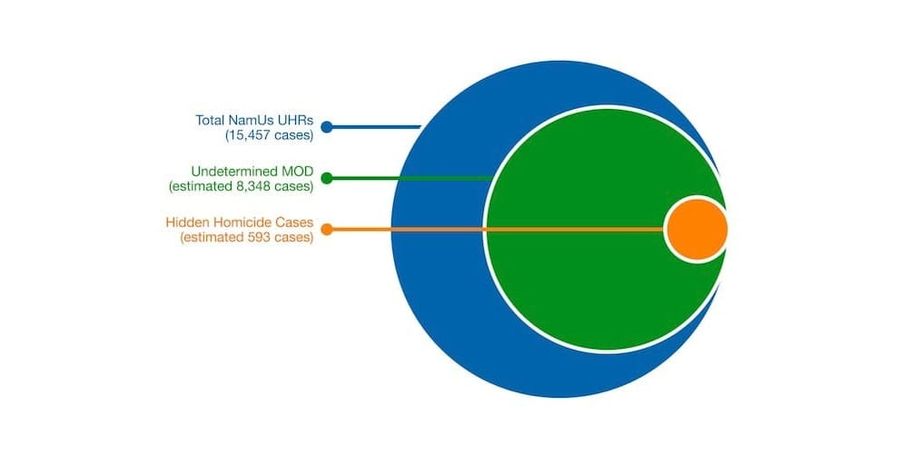
This study presents a retrospective analysis of 477 UHR cases from North America, all of which resulted in successful identifications. For each case, publicly reported data were analyzed to evaluate pre- and post-identification variables, including biological sex determination, manner of death classifications and case resolution status. Of note, FGG led to a change in manner of death from undetermined to homicide in 7.1 % of applicable cases, thus revealing instances of violent crime that would not have qualified for advanced genetic testing under current policy constraints. In homicide cases, 26.1 % resulted in charges, convictions, or were associated with deceased or serial offenders.
These findings underscore the critical role of FGG in restoring identity as well as supporting investigations, uncovering violent crime, and advancing public safety. Yet, current federal policy restricts the use of FGG to cases where homicide already is suspected or determined as the manner of death, excluding many UHRs marked as “undetermined” or “unknown. This restriction risks overlooking solvable cases and delays justice. Expanding access to FGG would close a critical gap in forensic investigations and would deliver outcomes for victims, families, and communities while reinforcing the societal commitment to dignity, respect and accountability for the unknown.