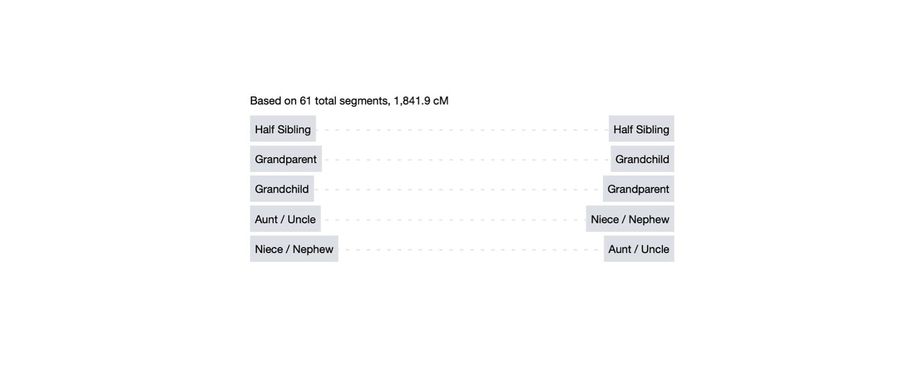
In genetic genealogy, the term genetic match is widely used to describe the results of database searches that identify individuals who share segments of DNA with a queried profile. In that context, the term is generally understood to mean a person who is genetically related to the individual of interest to some degree.
In forensic genetic genealogy (FGG), however, the same term is often carried over without sufficient reconsideration. While familiar and convenient, the word match carries specific and historically constrained meaning in forensic science. When applied uncritically to FGG, it can obscure the nature of the results being generated and lead to misunderstanding about what the data actually support.
What “Match” Traditionally Means in Forensics
In traditional forensic disciplines, the term match has been used to imply a direct correspondence between evidentiary material and a known source. In forensic DNA typing, this usage has been carefully limited, typically reserved for comparisons involving single-source profiles and reference samples where the analytical result supports an attribution to a specific individual.
This narrow use of the term is intentional. It reflects the evidentiary weight that the word match carries in investigative, legal, and courtroom contexts. A match suggests identity, or at least a direct association between evidence and a known person.
That meaning is deeply embedded in forensic practice, reporting standards, and judicial interpretation.
What Database Searches in FGG Actually Produce
Genome-wide SNP testing and forensic genetic genealogy operate on fundamentally different principles. Rather than attempting to directly associate evidentiary DNA with a specific individual, FGG seeks to identify genetic relatives—often distant—who share inherited segments of DNA with the unknown individual.
The results of an FGG database search are therefore not source identifications. They are associations consistent with shared ancestry. Each result represents a hypothesis: that the unknown individual and a database participant descend from one or more common ancestors at some point in the past.
The strength, relevance, and investigative value of these associations vary widely. Some may represent close relationships, while many reflect distant connections that are only meaningful when interpreted in aggregate and in context.
Why “Match” Becomes Problematic in a Forensic Context
Using the term match to describe these results can be misleading in several ways.
First, it implies a level of certainty or directness that the data do not support. Second, it risks collapsing a multi-step inferential process into a single word, obscuring the analytical work that must occur downstream. Finally, it can create confusion when forensic genetic genealogy results are communicated across disciplines that already associate the term match with source attribution.
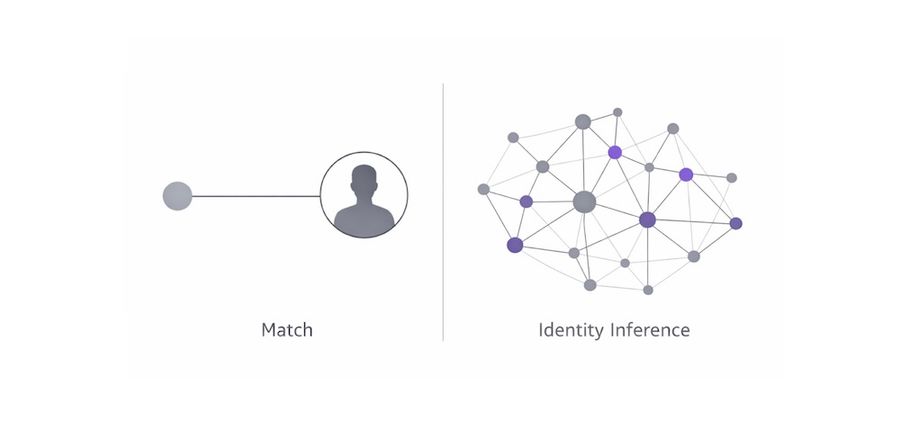
In practice, FGG does not produce matches in the traditional forensic sense. It produces relational data that must be interpreted, modeled, and integrated with genealogical reconstruction and non-genetic information to advance an identity hypothesis.
Identity Inference, Not Matching
A more accurate way to frame forensic genetic genealogy is as an identity inference process. Genetic associations serve as inputs to that process, not conclusions.
Investigators and analysts evaluate networks of genetic relationships, reconstruct family structures, and integrate historical, demographic, and contextual data to determine which identity hypotheses are consistent with the totality of the evidence. The genetic data guide and constrain this reasoning, but they do not independently identify a source.
Seen this way, the emphasis shifts from finding “the match” to evaluating how genetic relationships inform probabilistic reasoning about identity.
Toward More Precise Terminology
To reduce ambiguity and better reflect the underlying science, the forensic field may benefit from adopting terminology that distinguishes genetic association from source identification. Terms such as genetic relative, genetic relationship, or association more accurately describe the outputs of FGG database searches.
This shift is not merely semantic. Clear terminology helps align expectations, supports reproducible analysis, and improves communication across forensic, investigative, and legal domains.
Forensic genetic genealogy expands the reach of DNA analysis by enabling identity inference through genetic relationships rather than direct source matching. Recognizing this distinction and using language that reflects it is essential for accurately describing what the technology does, how conclusions are reached, and what the results mean in a forensic context.
The Best Case Scenario for Your Case
If you are using forensic genetic genealogy in your forensic investigation, you will need ultra-sensitive profiles optimized for detecting distant genetic relationships. If you aren’t aiming to detect all relatives, you are doing it wrong. Inadequate, incomplete, or inaccurate DNA profiles can severely compromise the effectiveness of downstream identity inference, making it difficult or even impossible to resolve complex cases.
If you are not ready to onboard this new technology in your own forensic setting yet, come to Othram. Our team operates the world’s first purpose-built forensic laboratory for forensic genetic genealogy. We developed Forensic-Grade Genome Sequencing® or FGGS™ to enable ultra-sensitive detection of distant relationships.
More forensic genetic genealogy cases have been solved with Othram FGGS™ than any other method. Let’s work together to unlock answers and bring justice to those who need it most. Get started here.