When investigators recover camera footage, they review it as early as possible to develop an investigative lead. It would not be effective and would waste resources to wait until a suspect is identified and then consult the footage to determine whether that person appears in it. Investigators examine what has been captured and allow that information to shape what happens next. Camera footage provides a visual feed of who was there. DNA evidence can provide something equally powerful: an “identity feed.”
However, traditional forensic DNA workflows assess and use only a fraction of the information contained in the evidence. Analysis is typically based on direct comparison of DNA evidence to a known individual (or very close relative in the case of identifying unknown human remains) or searching for a hit in an existing database. When no hit is obtained, the DNA evidence does not contribute to the investigation.
Modern forensic genomics changes that dead end outcome. Instead of waiting for the investigation to produce someone against whom the evidence can be compared, investigators can begin with the biological evidence itself to determine who the person is.
From “Was This Person There?” to “Who Is This?”
Forensic science has long been built around comparison. Does a fingerprint recovered from a scene match the fingerprint of a known person? Does a shoe impression match a particular shoe? Does a DNA profile match a known individual or a profile stored in a database?
These are all versions of the same question: “Was this person or object there?”
This is an important and valuable question that lends support to an investigation. Comparison is an essential part of forensic science because it can connect evidence to a person or object already known to investigators. But each comparison requires a candidate to compare against. Investigators must already have someone, something, or an existing database record against which the evidence can be linked.
Without a candidate or database match, the evidence is often uninformative.
Forensic-Grade Genome Sequencing® overcomes this limitation by making it possible to ask a fundamentally different question: “Who is this?”
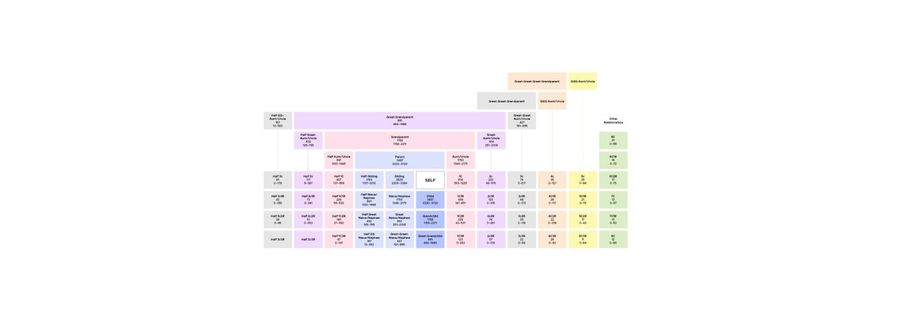
A comprehensive DNA profile developed from forensic evidence can reveal genetic relationships between the unknown person and people who have consented to comparison. Those relationships, combined with genealogical research and public records, can point investigators toward particular families, ancestral lines, and possible identities.
Why DNA Should Lead
Using DNA early does not replace a conventional investigation. It focuses the investigation.
When biological evidence is examined with Forensic-Grade Genome Sequencing® early in the investigation, investigators can use DNA to prioritize leads, evaluate competing theories, and direct records research. They may be able to identify promising avenues before memories fade, records become harder to locate, relatives move or die, and additional evidence is lost. Moreover, investigators will be able to save time and resources to bring justice to victims and families and free them up to investigate more intractable crimes.
Allowing the DNA to lead can also reduce the risk of tunnel vision. An investigation that begins with a favored theory may unintentionally suffer confirmation bias and other evidence may be interpreted through the lens of that theory. Beginning with biological evidence provides an independent source of information about the unknown person and allows that information to support, refine, or challenge existing assumptions.
This capability is especially important in cases involving unidentified human remains, where there may be no initial theory of identity. The Combined DNA Index System, commonly known as CODIS, includes indexes for missing persons, relatives of missing persons, and unidentified human remains. However, its largest holdings consist of DNA profiles based on traditional genetic markers from known offenders and arrestees.
Most unidentified people are not known offenders and therefore there is no DNA profile in CODIS that can return their name through a direct database match. Identification through the missing-person indexes also depends on the right comparative profiles, such as DNA from the missing person or close biological relatives, already being housed in the database. Without those specific DNA profiles, a conventional database search cannot produce an association even though the DNA evidence contains valuable identity information.
The same challenge arises in violent crime investigations. The person who left the DNA may have no obvious connection to the victim, may never have been considered during the original investigation, and may not have a qualifying DNA profile in CODIS.
The earlier investigators can make use of the powerful information DNA can provide, the sooner they can build an investigative strategy.
Reference Testing Turns Direction into Answers
Forensic genetic genealogy often produces a set of related possibilities rather than one unambiguous identity. Records may point to several branches of a family. Multiple people may be candidates given the known facts. Historical documents may be incomplete, inconsistent, or simply unavailable. In such cases reference DNA testing becomes essential in defining or refining investigative leads.
A reference donor is someone who voluntarily provides their DNA sample so that it can be compared with DNA evidence to help focus an investigation. Reference donors are relatives of an unidentified person or of the person who may have left DNA at a crime scene. Donors frequently have no firsthand knowledge of the case and are not considered persons of interest. Their DNA serves solely to help investigators evaluate a possible biological relationship revealed through DNA and genealogical research to hone the investigation.
A strategically selected reference sample can help investigators:
- Confirm or refute a proposed biological relationship.
- Determine which branch of a family is connected to the unknown person.
- Distinguish between multiple plausible identities.
- Focus research and outreach on the strongest hypothesis.
- Avoid contacting or testing people whose participation is unnecessary.
- Move toward a more precise and scientifically supportable conclusion.
Reference testing allows investigators to test the hypotheses produced by genetic genealogy rather than relying only on family trees. As explained in Othram’s article on the role of reference DNA testing in forensic genetic genealogy, this testing helps connect genealogical research with rigorous scientific evidence.
A single reference sample may not always resolve a case. It can instead eliminate an incorrect branch or show investigators that additional research is required, which can be valuable in supporting an investigation. Knowing where an answer is not located can be just as important as knowing where to continue investigating.
Have You Been Contacted by Othram?
If an Othram representative has contacted you, genealogical research may indicate that you could be biologically related to someone relevant to an active identification or law enforcement investigation. Your relationship may make you particularly well positioned to help investigators evaluate a hypothesis that cannot be resolved through historical records.
Othram is reaching out because you may be able to clarify a biological relationship relevant to the case. You may have no personal knowledge of the investigation or the individual whose DNA is being examined. In some cases, the relevant family connection may extend across multiple branches or generations.
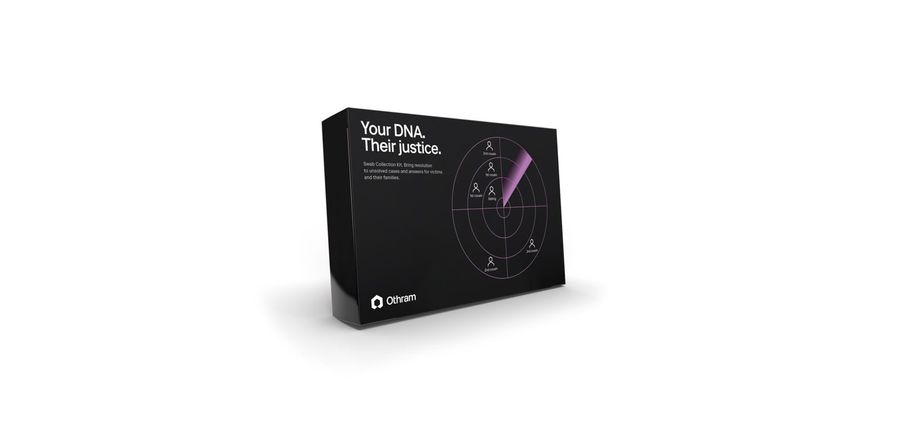
Participation is voluntary. Before deciding whether to help, you will be provided an opportunity to understand why you were contacted, which agency is responsible for the investigation, what participation may involve, and how your information will be used. You may be asked to provide a limited amount of family history or provide a DNA reference sample using a simple cheek swab.
You are encouraged to ask questions to understand the process, the benefits, and any risks and independently verify that the outreach is legitimate. You can request the representative’s name, information about the investigating agency, and contact information that allows you to confirm the request. You may also contact Othram through our official contact page rather than relying only on the phone number or email address used to reach you.
Genetic information deserves careful protection. The representative contacting you should explain the testing process, how the requested sample relates to the investigation, and the privacy practices that apply before you consent to participate. Additional information about Othram’s handling of personal and genetic information is available in its privacy notice.
There is no obligation to make an immediate decision or participate. Asking questions, confirming the identity of the person contacting you, and taking time to understand the request are reasonable parts of the process.
What One Reference Sample Can Accomplish
A reference donor may not recognize the name associated with a case. The relevant connection may involve a distant relative, a family branch separated by generations, or someone whose identity has been lost over time. That does not make the donor’s contribution any less important.
Their DNA may provide the information needed to distinguish between two family lines. It may eliminate a less informative but still plausible hypothesis, allowing investigators to redirect their efforts. In other cases, it may support the final connection needed to identify a victim, restore a name to unidentified remains, or advance the investigation of a violent crime.
A Better Model for Forensic Investigation
Comparison matching will always be an important part of forensic science. But a comparison-based system can only find what it has already been found. When an unknown person is absent from a database and investigators do not know whose profile to request, waiting for a comparison to be performed may mean waiting indefinitely.
Modern forensic genomics provides another path. It allows DNA to generate direction, genealogical research to turn that direction into hypotheses, and reference testing to evaluate those hypotheses with scientific evidence.
Investigators would not wait until the end of a case to review the available camera footage. When DNA can provide meaningful investigative direction, they should not wait to follow it either.
The most powerful evidence should not merely confirm where an investigation has already been. It should help determine where the investigation can go.