This year, the United States marks the 250th anniversary of the Declaration of Independence. It is an opportunity to celebrate our nation’s founding and reflect on what generations of Americans have built since those words were first committed to paper.
The Declaration articulated an extraordinary vision. It proclaimed that all people are created equal, endowed with unalienable rights, and entitled to the equal protection of the law. Those ideals became a reality because generations of Americans built the institutions and the infrastructure that made them possible.
Over the past 250 years, America has repeatedly transformed itself through investments in infrastructure. Railroads connected a continent. Highways reshaped commerce and travel. The electric grid powered homes, businesses, and industry. The postal system made communication dependable across vast distances. More recently, the internet connected people to information and to one another on a global scale.
As we look toward America’s next 250 years, it is worth asking what our generation should build.
One answer is both obvious and overdue: we should build America’s justice infrastructure.
Forensic science is a critical component of public infrastructure. Yet forensic science is only one component of something even larger. Justice, too, depends on infrastructure. It depends on scientific capability, trained professionals, sustainable funding, coordinated processes, modern technology, and systems that allow information to move efficiently from one stage of an investigation to the next.
When that infrastructure functions well, victims are identified, offenders are held accountable, and families receive answers. When it fails, the consequences are profound. Justice is delayed or denied entirely, victims remain unidentified, crimes go unsolved, and families are left with unanswered questions that can last a lifetime.
We instinctively recognize failures in other forms of infrastructure. When the power goes out, we understand that the electrical grid has failed. When an important letter never arrives, we recognize a breakdown within the postal system. When internet service is interrupted, we do not conclude that information has disappeared. We understand that the network responsible for delivering it has failed.
Justice must be viewed the same way. Recent FBI crime statistics show that only 58 percent of murders in the United States were cleared. Clearance rates were substantially lower for other serious violent crimes, including 46 percent of aggravated assaults, 28 percent of robberies, and just 27 percent of reported rapes. Behind each statistic is a victim, a family, and a community still waiting for answers.
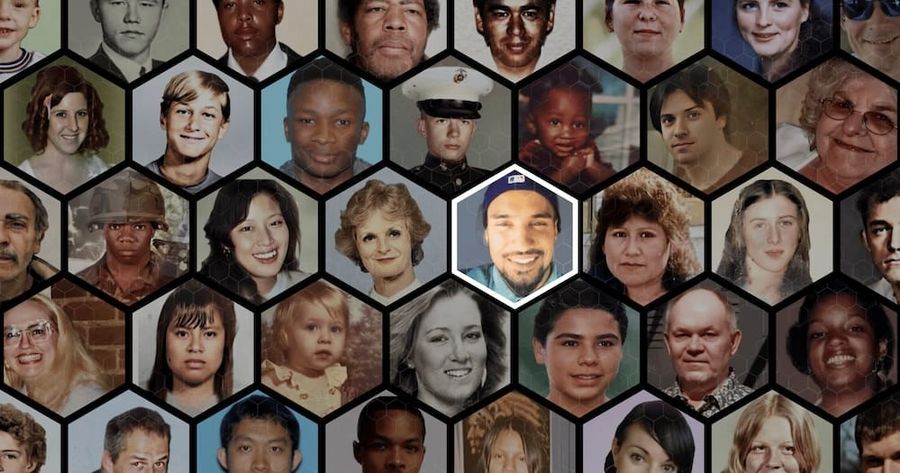
The same pattern exists in victim identification. Every year, thousands of unidentified people are recovered across the United States. Some are identified quickly, but many are not. Experience has shown that once those early opportunities are missed, most remain unidentified for years or decades. The science capable of restoring a name may already exist, yet the system responsible for delivering that answer often does not.
These problems are often discussed independently, but they are symptoms of the same underlying issue: our justice infrastructure does not yet consistently deliver the outcomes that modern society should expect.
Unlike many infrastructure challenges throughout history, this is no longer a problem of scientific possibility. Advances in forensic genomics, DNA sequencing, forensic genetic genealogy, and artificial intelligence have transformed what is possible. Cases once considered unsolvable are now being resolved because the evidence has always contained the answers. We simply lacked the tools to read it.
The science has advanced.
Our infrastructure has not kept pace.
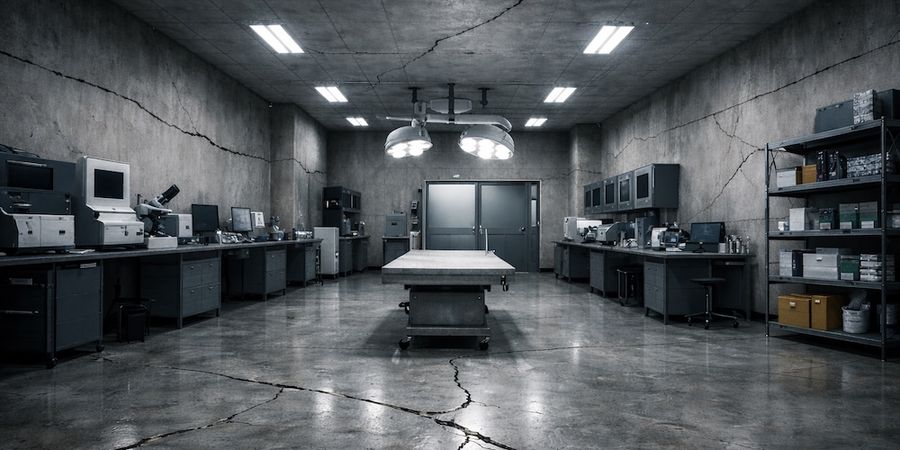
Encouragingly, policymakers are beginning to recognize this. The proposed Carla Walker Act calls for dedicated federal investment to upgrade and modernize America’s public forensic laboratory infrastructure. This will give forensic laboratories access to the technologies, expertise, and capacity needed to identify more victims, solve more violent crimes, and deliver answers to more families.
Nearly seventy years ago, President Dwight D. Eisenhower signed the Federal-Aid Highway Act, launching what would become the Interstate Highway System. No one expected thousands of miles of highways to appear overnight. Across the country, engineers surveyed land, construction crews poured concrete, steelworkers erected bridges, and communities built their own sections of a network that no single person could complete alone.
Most of the people who helped build the Interstate Highway System never thought of themselves as building a national network. They were building a bridge, an overpass, or a few miles of roadway. Taken individually, each project seemed small. Together, they transformed our country.
Building the infrastructure for justice requires the same kind of effort. Scientists, public laboratories, law enforcement agencies, legislators, universities, nonprofit organizations, and citizens all have a role to play. Like every great infrastructure project before it, this one will not be built by a single organization or a single generation. It will be built by thousands of people making contributions that, together, become something much larger than any one effort could accomplish alone.
The founders could not have imagined DNA sequencing, forensic genomics, or artificial intelligence. But they understood something timeless: a nation committed to liberty must also be committed to justice. Every generation since has expanded access to the institutions and infrastructure that make those ideals more real. Our generation has the opportunity to build the next great chapter in America’s history.
Like every great infrastructure project before it, the infrastructure for justice will not appear overnight. It will be built one laboratory at a time, one deployed solution at a time, one public policy at a time, one solved case at a time, and one identified victim at a time. Individually, those contributions may seem small. Together, they have the potential to transform justice for generations to come.
Railroads connected a continent. Highways connected communities. The electric grid delivered power. The internet connected the world to information.
The next great American infrastructure project should ensure that justice is no longer limited by geography, resources, or outdated technology.
The next 250 years begin with what we choose to build today.